Before you build
Product Blueprint
You have not built yet and need a plan before committing to code: what to build, on what stack, with what team and budget, and which risks to manage early.
Get a Product Blueprint

How we work
You may need technical direction, people to build, or both. We supply them through Fractional Technical Leadership and Team Provisioning. The two services work together or independently, depending on the gap.
Both start with diagnosis, before we scope work or source candidates. For a clear picture before committing to an engagement, start with a Product Blueprint or Product Audit.
You need senior technical and strategic capacity inside your company, without committing to a full-time hire. We provide it on a retained basis.
The engagement starts with diagnosis. What your company needs determines the work: some engagements focus on architecture, others on hiring. Most involve a sequence of both.
Before you build
You have not built yet and need a plan before committing to code: what to build, on what stack, with what team and budget, and which risks to manage early.
Get a Product BlueprintAfter you have built
You have built and are stuck. We review the same areas covered by a Product Blueprint against your existing product to identify what is blocking progress and what resolving it takes.
Request a Product Audit| Area | Product Blueprint before you build | Product Audit after you have built |
|---|---|---|
| Product scope | Key MVP features and what to defer until after traction | The features built, what is missing in your vision and what to defer |
| Stack and architecture | A feasibility assessment and recommended technology stack | Whether the technical foundation can support the roadmap |
| Delivery sequence and timeline | A delivery sequence and timeline | What is blocking progress and whether the sequence is realistic |
| Team | The team required to build the product | Who owns the work and where skills or capacity are missing |
| Budget | An estimated budget | Whether the estimates match the work and team required |
| Risks and technical debt | Risks and decisions to settle before building, including stack limitations and common causes of cost overruns | What needs resolving, in what order, and which decisions cannot wait |
Every fractional engagement runs through four phases.
We identify the problem before scoping the work. This is a structured assessment of your product, commercial model, team and technical foundation, not a discovery call. You leave with a clear view of what is blocking your company and what resolving it takes.
We turn the diagnosis into a plan: what changes, in what order, and what your company needs to carry it out.
We work alongside you to shape the product, make technical decisions and structure hiring. Progress is measured against the problems identified in Diagnose.
We ensure our fixes work and hand over so your team or the team we build owns the work that needed external leadership. If another phase is needed, it starts with a clear scope of work or proposal.
The goal is self-sufficient founders.
A product your own team understands, a technical team that can scale it, and less risk, because the business no longer depends on agencies, contractors or us.
A job description can match a CV and still miss what your product needs. Most recruiters work from that match, while early-stage job descriptions often leave the real requirement undefined.
We start there: the capability your product and team need at this stage. Technical recruitment then follows that requirement, from sourcing through to integration.
A wrong hire costs more than the fee or salary. It delays delivery, affects morale and can leave problems built into the product.
Local
You need a structured local search, an assessment of candidates you have already found, or both. We support each route, using the same recruitment process regardless of market.
Global
You need engineers who work as part of your team. We source, screen and place candidates from a network of more than 300 pre-screened engineers across offshore markets.
Our work includes onboarding, integration and support through the first 90 days. Engineers join your sprints, stand-ups and product decisions as embedded team members, rather than working through a separate ticket queue.
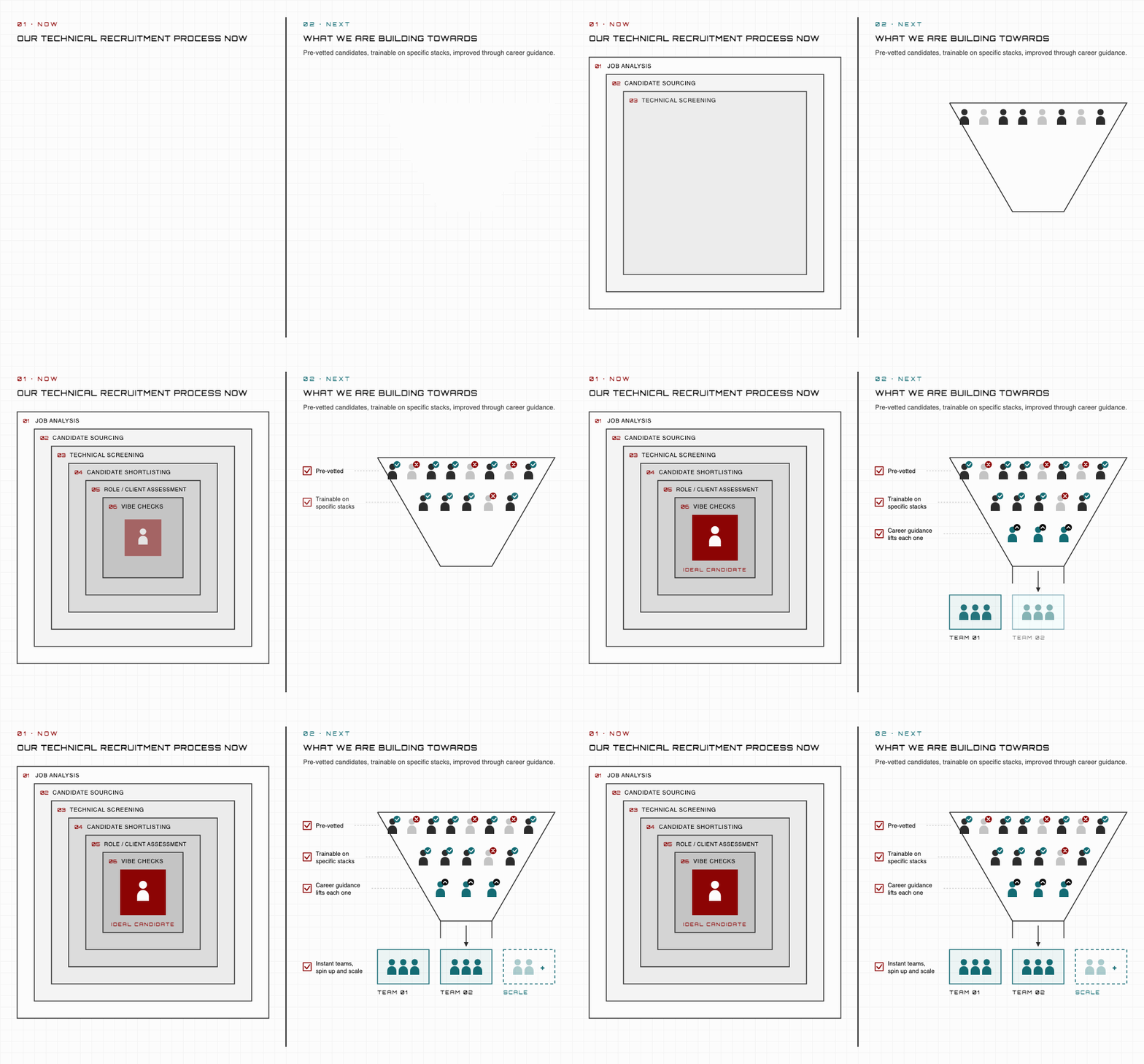
Define the capability you need before relying on an existing job description.
Map the role to your product, team and technical constraints.
Identify candidates from onshore or offshore markets, according to your requirements and runway.
Assess capability against your specific requirements rather than a generic benchmark.
Present a shortlist with the context you need to assess each candidate.
Use an assessment specific to your company for shortlisted candidates.
Help you structure the interview, join if useful and assess cultural fit.
Evaluate the assessment and interview results, then advise on the offer.
Handle the offer conversation with you and the candidate.
Stay engaged for 90 days after placement to confirm integration and flag early risks.